
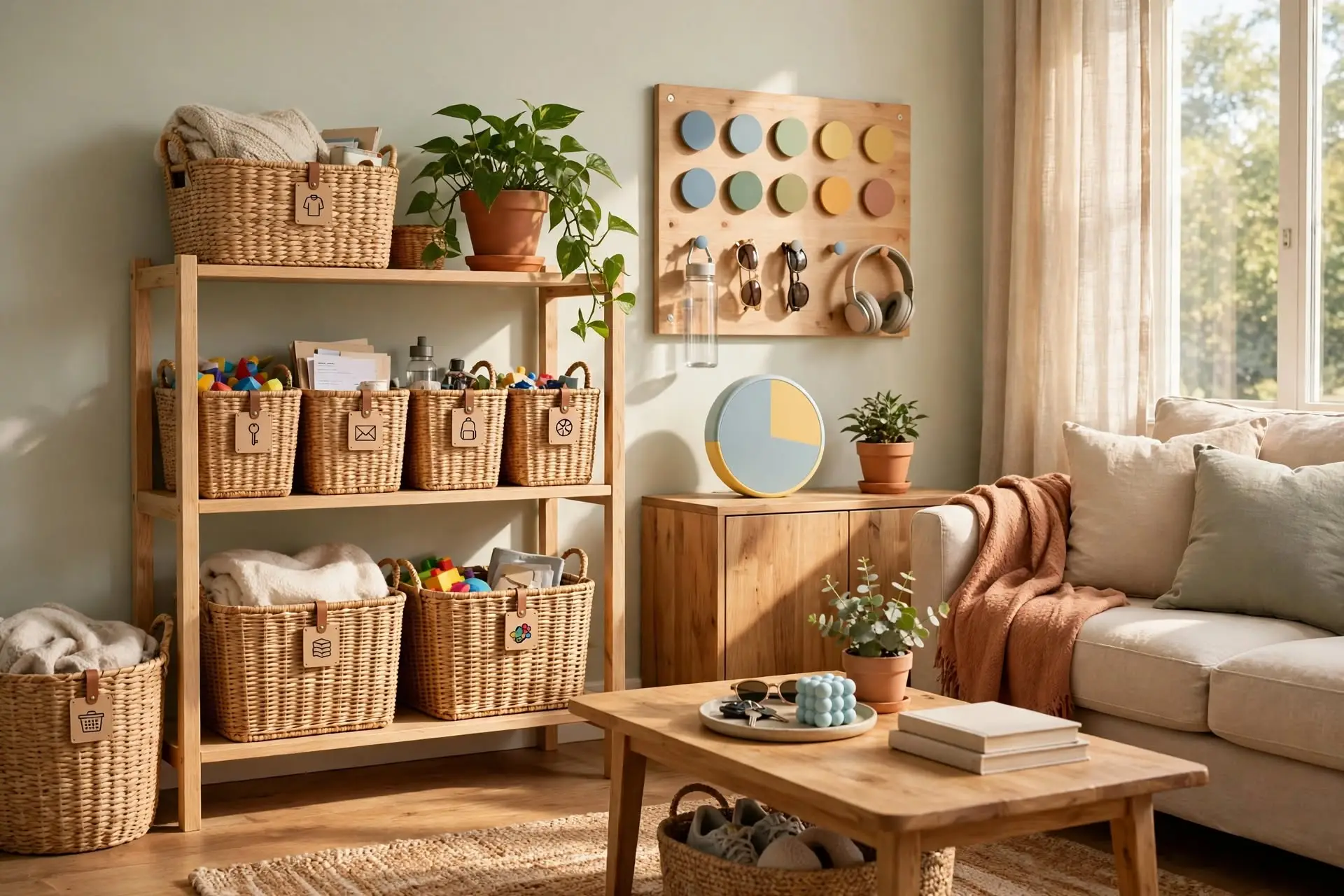
You have bought the planners, the bins, and the label maker, and the system worked for about nine days. Then a rough week hit, the bins filled with random items, and the label maker went in a drawer. ADHD-friendly home systems are built on a different idea, which is that your system must survive your worst week and not only your best one. This post shows you setups that take little effort to keep, so your home stays workable even when your energy is low.
What Makes ADHD-Friendly Home Systems Different
A system helps only when you actually use it. For ADHD brains, use depends on a few simple rules. Each rule below lowers the number of steps between you and a tidy space. The goal is not a home that looks like a catalog. The goal is a home where putting things away takes less effort than dropping them, because that is the version that survives a Tuesday.
Visible Beats Hidden
Open bins, hooks, and clear containers keep items in sight, so your brain remembers they exist. Closed cabinets and deep drawers hide things, and hidden things get forgotten. This is why a labeled bin on the floor gets used and a perfectly organized drawer does not. You are not being messy by needing to see your stuff. You are working with how your memory actually functions, and out of sight really does mean out of mind.
Fewer Steps Beat More Steps
If putting a coat away takes four steps, it ends up on the chair. A hook by the door takes one step, so the coat lands on the hook. Every extra step is a place where the task can stall, and with ADHD, stalled usually means abandoned. So count the steps out loud if you have to. Open the closet, find the hanger, hang it, close the door are four different chances to quit. One hook is one. Remove the steps and the habit appears on its own.
Items Live Where You Use Them
Store the school forms near the place you open the backpack, and store the cleaning spray near the sink that gets messy. Put things where the action happens, and not where a store display says they belong. A system that requires you to walk to another room to put something away is a system you will quietly stop using, and you will blame yourself instead of the distance.
ADHD-Friendly Home Systems Room by Room
The Entryway Landing Zone
Install hooks at kid height and at adult height, and add a bin for shoes and a tray for keys. Put a small basket for things that must leave the house tomorrow, such as library books and returns.
The Kitchen Flow
Keep the dishes and cups at the dishwasher end, and keep snacks on a low shelf in one bin so kids can grab them. A weekly meal list on the fridge removes the daily “what’s for dinner” scramble.
The Laundry Loop
Give each person a color-coded basket and run one load each morning. Drop clothes straight from the dryer into the baskets, and let each person carry their own basket to their room.
The Paper Pile
Set up one inbox tray for all paper. Spend five minutes each Friday to sort it into three piles: act, file, and toss.
If you want a coach to help you set up one room, reaching out for a free consultation is the first step.
Where to Start Without Rebuilding Everything
Do not rebuild the whole house. Pick the spot that causes the most friction, such as the entryway, and fix only that spot for two weeks. When it works, move to the next spot. Small wins build trust in the system, and trust keeps you using it.
Keep Your Systems Running
Build a Five-Minute Daily Reset
Pick a time, such as right before dinner or after the kids go to bed, and return stray items to their spots. A five-minute reset keeps the system alive without a big cleaning day.
Use Reminders Instead of Memory
Set phone alarms for recurring tasks, such as trash night, library returns, and bill payments. A reminder at the right time beats a promise to remember.
Use a Donation Bag
Keep a bag in the closet for items you no longer use. When the bag is full, drop it off. Fewer items mean fewer things to manage.
Review & Adjust Monthly
Once a month, look at what stopped working and fix one thing. A system is a draft, and a draft improves with edits.
Involve the Whole Household
Walk your partner and kids through each spot and let them help name or decorate the bins. People keep systems they helped build.
When Home Stress Feels Bigger Than Systems
If your systems keep breaking down, a coach can help you find where the friction lives, choose one fix at a time, and adjust the plan each week. You get support that fits your brain and your home.
A calmer home is possible. Contact for a free consultation and build systems that fit your brain.