
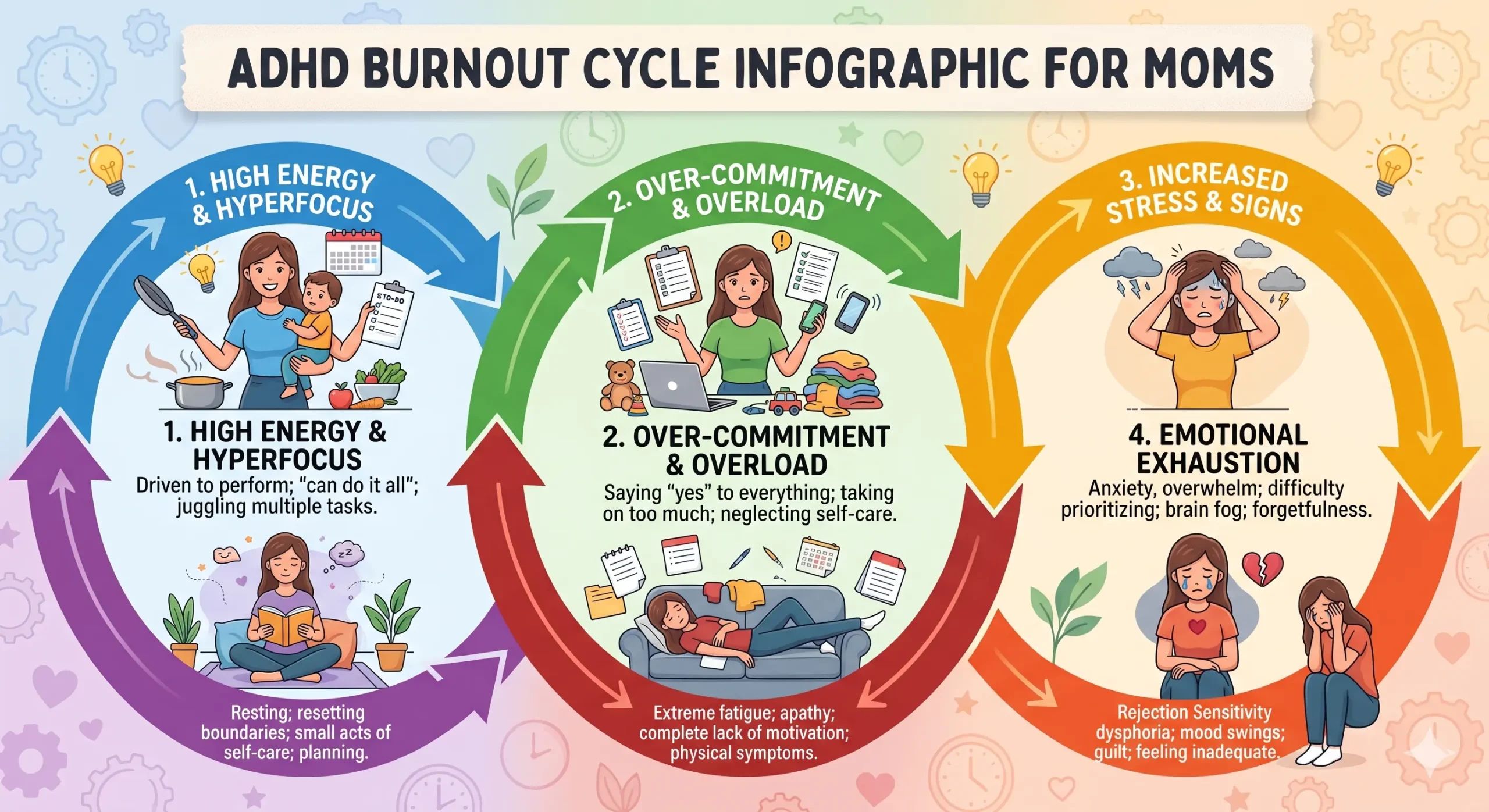
When most people picture ADHD, they imagine missed deadlines, classroom disruptions, or an obvious inability to focus. These narrow stereotypes leave an entire community of neurodivergent women, mothers, and professionals navigating life in the dark — wondering why everything feels so much harder than it looks.
Enter the high achiever with ADHD.
From the outside, these individuals are the definition of success. They’re top performers, idea generators, and the people who consistently bring home the wins. But underneath that polished exterior is an invisible scaffolding of silent effort holding it all together — and it often comes at a steep personal cost.
If you’ve spent your life achieving great things while secretly feeling like you’re running a marathon through deep water, your brain might simply work differently. Below are seven unique signs that you may be a high-functioning adult with ADHD — and what you can do about it.
1. You Were Diagnosed Late Because You Did Well in School
One of the biggest reasons high-achieving adults — especially women — are diagnosed late in life is a stellar academic track record. You didn’t disrupt class. You met deadlines. You pulled off strong grades.
Teachers and parents never suspected anything because your intelligence masked your underlying executive function struggles for years — until the complex demands of adulthood, career, and motherhood finally outpaced your ability to compensate.
Did you know? Research shows that women with ADHD are diagnosed an average of 5–7 years later than men, often after experiencing burnout, anxiety, or postpartum overwhelm.
2. You’re a Perfectionist at Work, But Chaos at Home
This is the central paradox of high-functioning ADHD. You embody the picture of perfection in your professional life — polished projects, impeccable communication, dependable results.
But because you use 100% of your cognitive energy maintaining that standard at work, you arrive home with an empty tank. The result? Baskets of unfolded laundry, a messy kitchen, missed appointments, and household systems that quietly fall through the cracks.
If you’re a mom, this often shows up as guilt — feeling like you’re “failing” at home even while excelling everywhere else.
3. You Trade Sleep and Free Time Just to Keep Up
How do you maintain a high-achieving reputation when your brain struggles with task initiation or time blindness? You trade your personal currency.
High achievers with ADHD frequently give up:
- Sleep (late nights powered by panic-driven hyperfocus)
- Weekends (catching up on what others finished during the week)
- Self-care, hobbies, and rest (always pushed to “later”)
You might need a midnight adrenaline rush to finish a project others paced out over days — and call it “just how I work.”
The High-Achiever Cycle
| External Reward | Internal Reality |
|---|---|
| ✅ Creative, innovative solutions | ⚠️ Frequent burnout cycles |
| ✅ Viewed by others as a success | ⚠️ Sacrificing sleep & free time |
| ✅ Labeled a “workaholic” | ⚠️ Living on the edge of crisis |
| ✅ Praised for productivity | ⚠️ Quiet shame and exhaustion |
4. Others Call You a “Workaholic”
Because your ADHD brain relies on the intense pressure of deadlines and the dopamine of a challenge, you dive into projects with an intensity that others mistake for standard ambition.
People around you might call you a workaholic. What they don’t see is that your non-stop work habit isn’t always driven by passion — it’s often a coping mechanism to override executive dysfunction.
In other words: it’s easier to do everything at full speed than to start something small.
5. You Feel Like a Fraud (The Imposter Trap)
Despite a literal mountain of objective achievements, awards, or praise, you struggle to internalize your success. Instead, you live with chronic feelings of inadequacy and self-doubt.
You might constantly fear being “found out” — operating under the assumption that your success is a fluke, lucky timing, or someone else’s mistake rather than your real capability.
This is one of the most painful (and most common) experiences among high-functioning ADHD women.
6. You’re Quietly Proud of Your Creative Solutions
It’s not all exhaustion and masking. An ADHD brain brings real competitive advantages.
High achievers with ADHD are often deeply proud of their ability to:
- Innovate with out-of-the-box solutions
- Connect disparate ideas others miss
- Stay calm and resourceful in a crisis
- Think rapidly on their feet
When linear thinking fails, your brain takes the lead. Your neurodivergence isn’t just a struggle — it’s also your superpower.
7. The Reality Behind “I’m Fine”
The most exhausting part of being a high achiever with ADHD is the constant need to project total stability.
Externally, you always seem “fine” — responding with a smile and a capable attitude. Internally, it’s a different story. You feel like you’re on the edge of “keeping it together,” knowing that one more obligation could send the whole fragile system crashing down.
This continuous tightrope walk frequently leads to cycles of bone-deep burnout, anxiety, postpartum overwhelm, and identity loss — especially for moms juggling work, household, and emotional labor.
Awareness, Compassion, and Tiny Wins
If these patterns mirror your daily life, hear this clearly:
You are not lazy. You are not broken. Your brain simply works differently.
Being successful doesn’t mean you don’t have ADHD — it just means you’ve become exceptionally skilled at hiding the cracks. But you don’t have to survive on panic, overwork, and self-doubt forever.
By building awareness around your unique traits, practicing radical self-compassion, and shifting your focus to small, sustainable wins, you can protect your mental health and finally feel at peace inside your own life.
True success isn’t about running yourself into the ground to impress the world. It’s about building a life where your brilliant, unique mind can thrive.
You Don’t Have to Navigate This Alone
As a certified life coach specializing in ADHD coaching for moms, anxiety, postpartum support, and the mental load of motherhood, I help high-achieving women unmask, recover from burnout, and build sustainable systems that actually fit their brain.
Whether you’re newly diagnosed, suspect you have ADHD, or are tired of “holding it all together” — there’s a kinder, more supportive way forward.
🌿 Ready to Stop Surviving and Start Thriving?
👉 Book a Free Discovery Call with Melissa
👉 Explore ADHD Coaching for Moms
👉 See Coaching Packages
📞 Call: (612) 499-0692
📧 Email: melissanokeslifecoach@gmail.com
📍 Serving Apple Valley, Twin Cities, Minnesota, and clients virtually across the USA.
Frequently Asked Questions (FAQ)
Q1. Can you be a high achiever and still have ADHD?
Absolutely. Many adults with ADHD are high-achieving professionals, entrepreneurs, and mothers. Their success is often built on intense effort, masking, and coping strategies that look effortless from the outside but are exhausting internally.
Q2. Why are women with ADHD diagnosed so late?
Women often present with inattentive-type ADHD, internalized symptoms, and strong academic performance, which causes their symptoms to be overlooked until adulthood — frequently after pregnancy, postpartum, or burnout.
Q3. What’s the difference between ADHD coaching and therapy?
Therapy focuses on healing past wounds and mental health diagnoses. Coaching focuses on building practical strategies, systems, and self-awareness moving forward. Learn more here.
Q4. Do you offer virtual ADHD coaching?
Yes — I offer virtual coaching for women and moms across the USA, plus in-person sessions in Apple Valley and the Twin Cities.